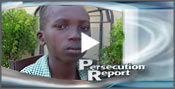
Violence against Christians in Orissa continues after almost an entire week. The Christian community in India is beginning to mobilize to show solidarity with the believers in Orissa and to urge the government to intervene more effectively to stop the rioting. The following is a recent update from India. Continue to uphold our brothers and sisters in Orissa.
So, the Olympics are over—the flame extinguished, the stadium empty, the television stations back to their regular schedules. But there continue to be plenty of reasons to uphold China in prayer. And even though the newspapers may have moved their spotlight away from China, news services dealing with Christian persecution continue to release reports confirming the country as an environment of opposition for Christians.
One such report is the recent arrest of Bishop Jia Zhiguo on August 24, shortly before the Olympic ceremonies had concluded. The elderly leader was dragged out of a cathedral in Wuqiu where he had attended a morning mass service. He has reportedly been taken to an unknown location.
This is hardly the first time Zhiguo has faced persecution. In fact, this is the twelfth time he has been arrested by police and he has been under house arrest for months. During the Olympics, the government had him under 24-hour surveillance by police. Police had even built a shack outside his home so they could keep him under close watch.
One priest made the following comment in response to the bishop's arrest: “After the Olympics, everything is back to the way it was before in China.”
It’s easy to see the truth behind such a statement. It's would be easy also to get discouraged or dismayed by it. The key, of course, is being compelled to prayer by such words. Prayers of supplication, yes, but we can continue to say prayers of joy too. After all, before the Olympics, we heard incredible testimonies of believers refusing to deny their faith in Christ despite threats, harassment, and imprisonment. Before the Olympics, more and more Christians were becoming aware of the trials facing fellow believers in China. Before the Olympics, nonbelievers--even persecutors--were coming to faith in Christ.
There was hope that the event would help change China for the better--or at least that the promises made during by the government regarding improvements in human rights would be kept. But it's a truth undeniable that God was at work in this country long before there word "Olympics" was even uttered there. And he will continue to be. The Olympic flame may be extinguished, but the light of His faithfulness shines on.
It's been a productive reading time for me this month. I hope you will take the opportunity to check out some of these books.
1. John A: The Man Who Made Us by Richard Gwyn. To my shame, I admit that this is one of the first books on Canadian history that I have ever read and the first on one of our prime ministers. That said, I could not have picked a better one to start with. A highly entertaining and educational read, this book is the first of a two-volume set by Richard Gwyn on the life of Canada’s first Prime Minister, John A. MacDonald. I highly recommend it.
2. Meditations on the Cross by Dietrich Bonhoeffer. A collection of sermon by the famous German martyr on the theme of the cross. Certainly a mixed bag, as far as a collection is concerned. Some of them are excellent (e.g. the chapters on discipleship and the cross and the treasures of suffering). Others are almost incomprehensible (i.e. almost anything taken from his book Ethics). I had considered making this book available to our supporters but decided against it after having read it. I am afraid that too many would be disappointed.
3. Banker to the Poor by Muhammad Yunus. Written by the man who is recognized as the creator of microcredit as a means of helping the poor and who won a Nobel Peace prize for it. Tells the story of how Yunus began and developed the concept small loans to the poor in Bangladesh as a means of helping them help themselves and how this continues to be perhaps the most effective means of really assisting the poor; far more so that providing handouts or relief aid. This is an important book that project officers working in developing countries really should read. Highly readable as well.
4. The Return of History and the End of Dreams by Robert Kagan. Interested in understanding world events in the 21st century? Want to know why the hopes and expectations that came after the fall of communism in eastern Europe failed to materialize? Want to know why increased trade does not (and never really has) resulted in increased human rights? Read this book. It only took me a couple of hours but it was well worth it.
5. Dancing Under the Red Star by Karl Tobien. The story of Margaret Werner, an American citizen living in the Soviet Union with her family, who was 17 years old when the secret police came for her father on trumped-up charges of treason. Left destitute, she and her mother fought extreme cold and near starvation, taking whatever jobs they could find. Seven years later, in 1943, the police came for Margaret. Accused of espionage, she was sentenced to 10 years' hard labor in Stalin’s gulag. Tobien, her son, describes the appalling privations and backbreaking work in her Siberian prison camp. We will be making this book available in our monthly newsletter and online in October.
6. The Aquariums of Pyongyang: Ten Years in the North Korean Gulag byKang Chol-hwan. North Korea is today one of the last bastions of hard-line Communism. Its leaders have kept a tight grasp on their one-party regime, quashing any nascent opposition movements and sending all suspected dissidents to its brutal concentration camps for "re-education." Kang Chol-hwan is the first survivor of one of these camps to escape and tell his story to the world, documenting the extreme conditions in these gulags and providing a personal insight into life in North Korea. We will also be making this book available online and in our October newsletter.
That’s it for another month. If you have any books that you would recommend, let us know.
We are being swamped with reports of attacks on Indian Christians in Orissa state. This week's Persecution and Prayer Alert will focus solely on the violence being faced by believers there. The following is an India television report of a young woman who was burned to death by Hindu militants on Monday at the orphanage where she worked.
The woman in this picture is famous for a face of fear. Vietnamese-Canadian Kim Phúc is best known as the girl in the centre of a well-known photograph of burned children fleeing a bombed village during the Vietnam War.
But today, hers is a face of forgiveness. I recently heard Phúc read her essay “The Long Road to Forgiveness” on National Public Radio. It is an honest, insightful and moving piece about how she overcame her anger against her attackers, which was like “a hatred as high as a mountain,” and reached a place of peace and forgiveness through her faith in Christ. As she notes, this transition did not happen overnight. In fact, one of the most refreshing aspects of her essay is its emphasis on forgiveness as a difficult an ongoing process—not sudden or easy or static.
Phúc still suffers pain from the severe burns she sustained. But I can hear the enduring peace in her voice, even in her stricken state. “Forgiveness made me free from hatred,” she says.” I still have many scars on my body and severe pain most days but my heart is cleansed.” It is a peace beyond human reason, perhaps beyond comprehension; it comes only through a relationship with the holy.
Some of the most horrific persecution stories we receive involve young Christians who are victims of brutal violence because of their faith. Like Phúc, many of them will forever suffer pain and bear scars from their childhood trauma. There is Ami Ortiz, the son of an Israeli pastor who was severely injured by a letter bomb. There is Nankpaqk Kumzwam, a Nigerian boy who was slashed in the shoulder and shot in the back when Muslims attacked his church, killing his parents and siblings. There is Elina Das, a Bangladeshi pastor’s daughter who was gang raped by Muslims. These young believers, all under the age of seventeen, have undergone experiences more traumatic than many adults undergo in a lifetime.
And yet, the Lord can guide these children too to mercy and hope amidst affliction. I know this. I pray for this. And I hold words like Phúc’s, and testimonies of persecuted Christians who have similarly embraced the power of love and forgiveness, against the feelings of anger and disgust that flare up when I hear of children suffering such atrocities. It is utterly humbling to be reminded that we serve a God who is not famous for His fear, but for His perfect forgiveness.
Increasingly reports are coming out that not only did China deliberately break its promises to improve human rights for its citizens leading up to the Olympics but that during the Olympics restrictions were increased on churches and that there are crackdowns planned after the crowds, reporters, and athletes have gone home. The following is a report from Compass Direct:
Religious Freedoms Threatened as Olympics Draw to Close
House churches asked not to meet during Games; new crackdown planned for October.
By Sarah Page
DUBLIN, August 20 (Compass Direct News) – As the Olympics draw to a close, new evidence of religious freedom abuses offers a stark contrast to China’s efforts to provide religious services for athletes and visitors during the Games.
China hired religious clerics to provide these services and published a special bilingual edition of the Bible for distribution to athletes and official churches during the event. Simultaneously, officials asked house church leaders in Beijing to sign documents agreeing not to hold services during the Games, the China Aid Association (CAA) reported on August 13.
More ominously, China has planned a new crackdown on four “troublesome elements,” including house church leaders, for October, when most Olympic athletes, tourists and journalists will have left the country, CAA reported on Monday (August 18).
Positive Steps
A British-based Christian charity, the Bible Society, provided funding for a special bilingual Olympic edition of 30,000 full Bibles and 10,000 New Testaments for distribution in the Olympic Village and to registered churches in the Olympic cities, the Catholic News Agency reported in June. The Amity Printing Press, China’s only government-approved Bible publisher, printed the books in a new multimillion dollar facility that opened in Nanjing in May.
The Chinese government claims that Amity produces more than enough Bibles to meet the needs of the Chinese church, a claim many religious freedom organizations dispute. Amity also prints Bibles for export internationally.
A report circulating before the Games declared that China had banned Bibles from the Olympic Village, but this report proved false.
Officials also hired religious clerics from the five government-approved faiths to provide services for athletes and tourists during the Games. The five groups are Buddhists, Taoists, Muslims, Protestants and Catholics; each one answers to a specific religious institution appointed to oversee their activities.
Restrictions in Place
In the lead-up to the Games, officials asked a number of house church pastors to sign a document agreeing to forego any activities at “Christian gathering sites” or meeting points while the Games took place, according to CAA.
Under this agreement, house churches were banned from gathering from July 15 to October 15, a total of 17 weeks. Those who broke the agreement would face “disciplinary action.”
The agreement asked that house churches “refrain from organizing and joining illegal gatherings and refrain from receiving donations, sermons and preaching from overseas religious organizations and groups that have a purpose.”
The Union of Catholic Asian News confirmed in a report on August 7 that officials had forbidden bishops and priests in unregistered Catholic churches to administer sacraments or do pastoral work during the Games.
Officials placed several underground bishops under house arrest and forbade them to contact their priests, the report added.
In Wuqiu village of Jinxian county, Hebei, police erected a small “house” in front of the cathedral presided over by underground Bishop Julius Jia Zhiguo in order to provide a facility for 24-hour monitoring of the bishop.
Additionally, Bishop Joseph Wei Jingyi of Qiqihar in northeast China received phone calls from government officials asking if he planned to hold any religious gatherings during the Olympics. Wei said he would stay at home and pray for the success of the Games.
Prior to the Games, police banned several Christians from meeting with visiting U.S. government officials and asked others to leave Beijing for the duration of the event.
Police in July repeatedly asked house church pastor Zhang Mingxuan and his wife Xie Fenlang to leave Beijing. When they refused, police on July 18 entered a guesthouse where they were staying and drove them to Yanjiao in neighboring Hebei province.
When Zhang granted an interview to BBC journalist John Simpson, police detained Zhang and Xie before the interview could take place. (See Compass Direct News, “Chinese House Church Pastor Detained,” August 7.)
On August 10, police seized house church pastor and activist Hua Huiqi when he attempted to participate in a service at the government-approved Juanjie Protestant church in Beijing, where U.S. President George Bush was scheduled to appear.
Hua, still in hiding, wrote a letter to Bush later that day, pleading for prayer for his personal safety and for freedom of belief for all Chinese people. (See Compass Direct News, “Chinese Christians Plead for Relief as Olympics Continue,” August 13.)
October Crackdown
More prayer may be requested in coming months. China’s Communist Party (CPC) will launch a nationwide crackdown on four “unstable social elements” in October, CAA reported on Monday (August 18).
These elements were listed as illegal Christian house church leaders, petitioners, human rights defenders and political dissidents.
Outlined in a secret government directive passed to CAA, the crackdown is designed to coincide with a new campaign for “20 more years of political and social stability” in China.
In a speech on June 16, Zhou Yongkang, head of the Political and Legal Committee of the Central Committee of the CPC, called for “extraordinary measures” to be taken against these elements in order to protect the CPC’s continuous rule and reform programs.
The Beijing Municipal State Security Bureau has also begun a new citizen informant initiative, requiring ordinary citizens to report individuals and organizations posing a threat to national security, including those who “engage in activities that endanger state security by utilizing religions,” according to CAA.
So, what do you think? Will Christians in China really experience an improvement in their right to worship freely, as the Chinese government and the IOC assured the world? Are groups like VOMC and CAA too skeptical of the Chinese government? Give us your opinion.
With the resignation of President Musharraf of Pakistan this week, the question that I have been asked by reporters is, what difference will this mean for Christians in Pakistan.
The truth is, it probably won't make of a difference at all.
Many Christians and their leaders publicly rejoiced when Musharraf took power in 1999 in a bloodless military coup, as the civilian government had been rather indifferent, even hostile, to its tiny Christian minority. Many felt that Musharraf would provide a secularizing influence on the country, standing as a bulwark against the rising threat of militant Islam. This he did, to varying degrees of success. He did attempt to deal constructively with the infamous blasphemy laws which are abused to intimidate and punish Christians who run afoul of Muslim neighbours and business rivals, but was forced to back down after intense pressure from Muslim clerics.
Now many of the same leaders are rejoicing at the return to civilian rule and claiming that persecution rose during Musharraf's rule. It all smacks of political opportunism to me; just making sure that you are seen to be on the winning side.
Christians in Pakistan make up only a tiny minority of around 1.5% of Pakistan's population. As such, they are subject to constant societal discrimination and liability to violent attacks. It probably doesn't matter much who is in power, since the persecution really doesn't come directly from the state so much as it does from mobs who are unlikely to be punished regardless of who lives in presidential palace.
I am really irritated by former-Prime Minister Jean Chrétien’s recent criticisms of Stephen Harper for not attending the opening ceremonies of the Beijing Olympics. In bypassing the Beijing Olympics, he claimed on Monday to the press, Prime Minister Stephen Harper had undermined the work that every Canadian leader since John Diefenbaker has poured into improving relations with China. He also added that he believes China has made a lot of progress in respecting human rights in recent years.
As the Prime Minister’s assistant press secretary said, however, that is ironic that Chrétien “somehow skipped the '94, '98, 2000 and 2002 opening ceremonies. Based on his remarks, should we conclude that relations with those countries were damaged because Prime Minister Chrétien did not attend four out of five Olympic games that took place while he was prime minister?"
The fact is, Chrétien’s complaint is built on the very thing that drove his government’s foreign affairs policies when he was the prime minister - money. Chrétien is heavily involved in business in China as a consultant for clients with deep commercial interests in the country. As prime minister, Canada’s foreign affairs policy was heavily influenced by business interests, as was evident in Sudan when the government refused to get involved even when it was proven that revenues from Canadian oil companies were helping fund the Sudanese government’s genocidal activities against civilians in the south of the country. Is it any wonder that the former PM has such an affinity with a government that is involved in the same activity in Darfur, Sudan today? It was embarrassing to be a Canadian in Sudan at in the 1990's, as we served persecuted Christians who were being bombed by planes fuelled at Canadian-owned airstrips. It is embarrassing now as our former PM chooses to side with a government whose activities in Darfur, Tibet, and towards religious dissidents before and during these Olympic games have shown to the world just how "free" this country really is and how much we can trust their promises.
China was praised by the International Olympic Committee when it announced that protest areas would be set up for the Olympics. According to the BBC, a total of 77 applications have been received to stage protests during the Olympic Games period. Want to guess how many applications have been approved?
Zero.
Apparently no application has managed to meet China's strict rules on who can and cannot stage a protest. According to a spokesperson from Beijing's public security bureau, the majority (74) were withdrawn because the problems they raised could be better dealt with by "relevant authorities or departments through consultation."
How very convenient. Rather than having to say “No” to protests, the Chinese have rigged it so that they never have to say “Yes” either.
In what can only be seen as another sign of the increasing privatization of religious belief, the College of Physicians and Surgeons of Ontario are proposing changes that will no longer allow doctors in Ontario to opt out of such things as prescribing birth control or morning-after pills, assisting same-sex to conceive children, or doing abortions when it goes against their moral convictions or religious beliefs. Physicians would also not be allowed to refuse to do referrals in such cases. Failure to comply would result in the doctor losing his/her right to practice medicine in Ontario.
Personal beliefs and values and cultural and religious practices are central to the lives of physicians and their patients. However, as a physician’s responsibility is to place the needs of the patient first, there will be times when it may be necessary for physicians to set aside their personal beliefs in order to ensure that patients or potential patients are provided with the medical treatment and services they require.
Physicians should be aware that decisions to restrict medical services offered, to accept individuals as patients or to end physician-patient relationships that are based on moral or religious belief may contravene the Code, and/or constitute professional misconduct.
Jill Hefley, a spokeswoman for the college, told that the National Post that the reason for the draft was because of changes being made to the Ontario human rights system that could see doctors facing more complaints from patients who feel they are being discriminated against. In other words, the College of Physicians and Surgeons of Ontario will now become a watchdog for the Ontario Human Right Tribunal.
Once again, we see how gender, sexual orientation, and abortion “rights” are seen as more important that religious rights. The message that is being clearly sent to Ontario doctors is, “Believe what you will in your homes and churches, but you don’t dare bring your faith into your workplace or society in general.”
Yes, I know… not that old question again. WWJD? I admit that it has been overused. But it is a valuable question to ask from time to time. Of course, sometimes it's difficult to know exactly what Jesus would do in given situations. But lately, I have been reflecting on the antics of some Christian activists who protested in Beijing just prior to the Olympics and the question came to mind. Would Jesus have done this?
Would Jesus have trashed several hotel rooms in Beijing by painting murals and slogans on the walls protesting China's human rights abuses and then broadcasting what He was doing on the Internet? Is what really amounts to vandalism, a legitimate method of protest for His followers?
Would Jesus have written a press release several days in advance of going to China, announcing His arrest with ominous wording like “It is not known when Jesus, a leading religious expert, will be released” and then deliberately gone to the most highly guarded location in Beijing (Tiananmen Square) and provoked the authorities until they made His “prophetic” press release a reality? Would He have made sure His disciples called home to Galilee to make sure that the press release was sent out, exactly word-for-word what they had written from the comfort of their own home days earlier. Would His followers have assured those who accidentally found the press release days earlier on the Internet, that He actually wasn’t looking to be arrested and hoped that the press release would not be needed, knowing full well that He planned to go off to Tiananmen Square, with cameras rolling, making sure to record the inevitable arrest?
What do you think? Does the end justify the means?
For we wrestle not against flesh and blood, but against principalities, against powers, against the rulers of darkness of this world, against spiritual wickedness in high places. (Ephesians 6:12)
This afternoon, I received an email from a ministry in Pakistan that we have partnered with from time to time, asking for our urgent prayers during this time. They ask us to pray for:
The safety and security of CLAAS Pakistan staff at this time when they are getting threatening phone calls from Islamic fanatic groups. The main reason for the present threats is that they are fighting in courts on behalf of several young girls (some of them as young as 10 years old!) who have been kidnapped, raped and forcefully converted to Islam.
Pray particularly for Mr Joseph Francis and Ms Aneeqa Akhtar who have already have been assaulted earlier on this year by Islamists and whose lives are in danger. Pray for God's protection over them.
Pray for sisters Saba (13) and Anila Younis (10) who were kidnapped, forcefully converted to Islam and one of them was forcefully married to a Muslim man. Now they have been recovered and sent to a shelter home rather than to their parents. Pray that their court hearing on the 20th of August will be successful and that they will be able to be re-united with their parents.
Please pray for Saba's and Anila's parents also, pray that God will ease their pain and that they will be united with their girls. Remember here the parents and families of other victims of persecution and pray that God will give them strength and comfort them in these difficult times.
Pray for Danish Masih and his family. Danish uprooted his life a short while ago after he was wrongly accused of Blasphemy by other workers in a factory. He is in hiding now fearing for his life. Pray that he and his parents and wife will experience God's peace at these difficult times.
Pray for CLAAS Pakistan staff dealing with several cases of forced conversion including Sonia who was kidnapped and converted to Islam and then married to a Muslim man in June 2008. CLAAS has taken this case to the court but the court has not been able to deliver justice. Her abductors have refused to produce Sonia in the court because she has embraced the Islam. Therefore, her Christian parents cannot have her back.
Please pray for CLAAS UK staff and volunteers who are working hard to bring issues like the misuse of the Blasphemy laws and forced conversions to Islam to the attention of international organisations and communities. Pray that their voice will be heard and these issues taken into consideration by international representatives who can challenge Pakistani government officials on these matters.
Pray for the political situation in Pakistan and for the impeachment of President Musharraf. As we all know that Pakistan is going through very hard times, especially politically and economically.
The present government has decided to impeach the President. We pray that that Lord will give wisdom to the politicians and other people involved in this process and that the result will be beneficial to all the people of Pakistan.
Won't you take a few minutes and pray for Pakistan today?
Gulf News, a paper from the United Arab Emirates, has reported that a Saudi man working with the Commission for Promotion of Virtue and Prevention of Vice recently killed his daughter for converting to Christianity by cutting out her tongue and burning her to death. A few days before her death, the girl had written on a blog that she was a member of that her life had become an ordeal after her family members grew suspicious about her after she had a discussion about religion with them. She wrote that her brother had found some Christian articles written by her as well as a cross sign on her computer screen. Angry, he blamed her conversion on the Internet.
It was surprising to me that this story actually made it into an Arab paper at all (even in as liberal a Muslim country as UAE). But it is worth noting that the reporting of this story makes no comment that the killing of this girl was an inappropriate act by her father. Rather than making any mention of how wrong this action was, the author gives the incident a postmortem by blaming the Internet:
Saudi religious scholars have frequently warned against the dangers of Christian internet websites and satellite TV channels which attract Muslim youngsters to change their religion.
They decreed that watching these channels or browsing these websites which call for conversion to Christianity by various means is against the teachings of Islam.
The recent threat of protests by the Westboro Baptist Church at the funeral of Tim McLean in Winnipeg has added another dimension to the debate over freedom of expression in Canada. Some are suggesting that since the members of this church were not Canadians, they were not protected by the Canadian Charter of Rights and Freedoms and hence, had no right to protest or even enter the country. I might be swayed by this argument except that I believe that freedom of expression is a universal right that cannot be limited by the Charter.
It might be argued, however, that freedom of speech was not an issue in this case at all. As a funeral may be considered a private or religious meeting and not a public one, I am not convinced that Westboro Baptist can claim to have a right to spread their message in such a forum. As you will see below, religious meetings are also protected from disruption in the Canadian Criminal Code.
It seems to me that freedom of expression was not really at stake here for the same reasons that we do not feel bound to post every comment that is sent to this weblog. We state under our “Comment Policy” that we reserve the right to moderate all comments and either approve them or not approve them for any reason without explanation. This is not censorship since we defend the right of anyone to fully express their opinion on their own website or blog. As a private website, we can determine what gets said and not said. This is the essence of free speech; the right to say (or not say) whatever one wants said. The same holds true for private meetings like church services and for what goes on in one’s home. People have the right to say what they want in public or in their own meetings but they cannot force others to provide the medium for their message, be that a website, magazine, or religious service. If they want to speak, let them speak on their time and on their dime (this was one of the issues in the recently dismissed human rights complaint brought against Maclean’s magazine by the Canadian Islamic Congress).
In addition, it is worth considering that there are also legal protections for Canadians against such behaviour under the Canadian Criminal Code Sections 63 (1), 176 (2) and (3) , and 264 (1) and (2) which read as follows:
Unlawful assembly
63. (1) An unlawful assembly is an assembly of three or more persons who, with intent to carry out any common purpose, assemble in such a manner or so conduct themselves when they are assembled as to cause persons in the neighbourhood of the assembly to fear, on reasonable grounds, that they
(a) will disturb the peace tumultuously; or
(b) will by that assembly needlessly and without reasonable cause provoke other persons to disturb the peace tumultuously.
Disturbing religious worship or certain meetings
176. (2) Every one who wilfully disturbs or interrupts an assemblage of persons met for religious worship or for a moral, social or benevolent purpose is guilty of an offence punishable on summary conviction.
(3) Every one who, at or near a meeting referred to in subsection (2), wilfully does anything that disturbs the order or solemnity of the meeting is guilty of an offence punishable on summary conviction.
Criminal harassment
264. (1) No person shall, without lawful authority and knowing that another person is harassed or recklessly as to whether the other person is harassed, engage in conduct referred to in subsection (2) that causes that other person reasonably, in all the circumstances, to fear for their safety or the safety of anyone known to them.
Prohibited conduct
(2) The conduct mentioned in subsection (1) consists of
(a) repeatedly following from place to place the other person or anyone known to them;
(b) repeatedly communicating with, either directly or indirectly, the other person or anyone known to them;
(c) besetting or watching the dwelling-house, or place where the other person, or anyone known to them, resides, works, carries on business or happens to be; or
(d) engaging in threatening conduct directed at the other person or any member of their family.
These protections do not, in my opinion, impede on one's right to freedom of expression.
I am thankful that the planned protest by Westboro Baptist actually never took place. I am thankful for those who stood with the family during their time of grief. I am thankful for a country where, for now, we still have freedom of expression even though there are those who are seeking to suppress it in the name of not offending another’s religion or sexual orientation. I am also thankful for a country that protects the rights of its citizens to have private meetings without harassment. It is on this last basis that Westboro Baptist and groups like this should be addressed, not on the basis of whether we like what they are saying.


 Posts
Posts